Actor portrayals.
Actor portrayal.

Clinical Data

Attruby was proven to make an impact on survival, hospitalizations, and quality of life1,2*

*Defined as health-related quality of life and functional capacity.1

It's a marker you can measure.
And data you can stand behind.

Early increase in serum TTR within
28 days of starting Attruby2

Key Secondary Endpoint:
Change From Baseline in Serum TTR Level
Per standard protocol, any missing values were imputed as placebo values.3
Table Table
Table
Levels of serum TTR, also known as prealbumin, are a measure
of TTR stability4
IN 2 SEPARATE POST HOC EXPLORATORY ANALYSES

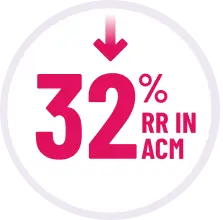
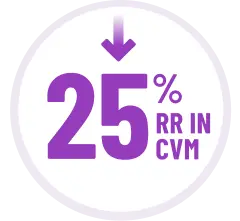
Early increases in serum TTR were associated with improved outcomes
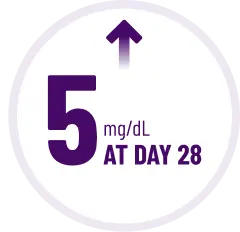
5at day
Arrow
32% Based on logistic
model prediction5†
25% Based on Cox proportional hazards model6‡

19% Based on Cox proportional
hazards model6‡

These exploratory analyses are based on participants from the ATTRibute-CM phase 3 clinical trial for whom serum TTR levels were available at both baseline and Day 28 and may not fully reflect the broader patient population. Additionally, this effect may not be generalizable to other TTR stabilizers.

Independent study in 557 patients with ATTR-CM from the ATTRibute-CM study. Univariate analyses in both the overall population and the Attruby-treated population; change in serum TTR remained an independent predictor of ACM even after adjusting for baseline demographic variables, diuretic use, NYHA class, baseline serum TTR, TTR variant or wild-type status, and National Amyloidosis Centre stage.5

Analysis of the mITT population of ATTRibute-CM. Combined outcomes of serum TTR CFB to Day 28 and Month 30, and first CVH or cardiovascular mortality, excluding those events that occurred prior to Day 28. Patient stratification was based on treatment group, baseline TTR (<20 or ≥20 mg/dL), and original randomization factors of TTR genotype (wild-type vs variant), NT-proBNP (≤3000 or >3000 pg/mL), and eGFR (<45 or ≥45 mL/min/1.73 m2).6

ACM=all-cause mortality; CFB=change from baseline; CVH=cardiovascular-related hospitalization; CVM=cardiovascular-related mortality; eGFR=estimated glomerular filtration rate; LS mean=least-squares mean; mITT=modified intent-to-treat; NT-proBNP=N-terminal pro–B-type natriuretic peptide; NYHA=New York Heart Association; RR=risk reduction; TTR=transthyretin.

References: 1. Attruby. Prescribing information. BridgeBio Pharma, Inc.; 2024. 2. Gillmore JD, Judge DP, Cappelli F, et al. Efficacy and safety of acoramidis in transthyretin amyloid cardiomyopathy. N Engl J Med. 2024;390(2):132-142. doi:10.1056/NEJMoa2305434 3. Data on file. BridgeBio Pharma, Inc.; 2024-2025. 4. Judge DP, Heitner SB, Falk RH, et al. Transthyretin stabilization by AG10 in symptomatic transthyretin amyloid cardiomyopathy. J Am Coll Cardiol. 2019;74(3):285-295. doi:10.1016/j.jacc.2019.03.012 5. Maurer MS, Judge DP, Gillmore JD, et al. Early increase in serum transthyretin by acoramidis independently predicts improved survival in TTR amyloid cardiomyopathy. J Am Coll Cardiol. 2025;85 (20): 1911-1923. doi:10.1016/j.jacc.2025.03.542 6. Sarswat N, Ambardekar A, Taubel J, et al. Acoramidis-mediated early increase in serum transthyretin is associated with lower cardiovascular-related hospitalizations and mortality: insights from the ATTRibute-CM study. Poster presented at: American College of Cardiology Annual Scientific Meeting; March 29-31, 2025; Chicago, IL. 7. Maurer MS, Masri A, Cappelli F, et al. Increase in serum TTR levels observed with acoramidis treatment in patients with transthyretin amyloid cardiomyopathy (ATTR-CM): insights from ATTRibute-CM and its open-label extension. Poster presented at: European Society of Cardiology Congress; August 30-September 2, 2024; London, UK.

Attruby was studied in a contemporary
ATTR-CM population that reflects recent
approaches in diagnosis and care

Attruby was studied
in a contemporary
population that reflects
recent approaches in
diagnosis and care

See Study Design

Indication and Important safety information

INDICATION

Attruby® (acoramidis) is indicated for the treatment of the cardiomyopathy of wild-type or variant transthyretin-mediated amyloidosis (ATTR-CM) in adults to reduce cardiovascular death and cardiovascular-related hospitalization.

IMPORTANT SAFETY INFORMATION

Adverse Reactions
Diarrhea (11.6% vs 7.6%) and upper abdominal pain (5.5% vs 1.4%) were reported in patients treated with Attruby versus placebo, respectively. The majority of these adverse reactions were mild and resolved without drug discontinuation.

Discontinuation rates due to adverse events were similar between patients treated with Attruby versus placebo (9.3% and 8.5%, respectively).

Laboratory Tests
Mean increase in serum creatinine of 0.2 and 0.0 mg/dL and a mean decrease in eGFR of 8.2 and 0.7 mL/min/1.73 m2 was observed in the adults with ATTR-CM treated with Attruby versus placebo, respectively, at Day 28 and then stabilized. These changes were reversible after treatment discontinuation.

Use in Specific Populations

Pregnancy & Lactation: There are no data on the use of Attruby in pregnant women. Animal data have not shown developmental risk associated with the use of Attruby in pregnancy. There are no available data on the presence of Attruby in either human or animal milk or the effects of the drug on the breastfed infant or maternal milk production.

Please see Full Prescribing Information including Patient Information.

INDICATION AND IMPORTANT
SAFETY INFORMATION

INDICATION

Attruby® (acoramidis) is indicated for the treatment of the cardiomyopathy of wild-type or variant transthyretin-mediated amyloidosis (ATTR-CM) in adults to reduce cardiovascular death and cardiovascular-related hospitalization.

IMPORTANT SAFETY INFORMATION

Adverse Reactions
Diarrhea (11.6% vs 7.6%) and upper abdominal pain (5.5% vs 1.4%) were reported in patients treated with Attruby versus placebo, respectively. The majority of these adverse reactions were mild and resolved without drug discontinuation.

Discontinuation rates due to adverse events were similar between patients treated with Attruby versus placebo (9.3% and 8.5%, respectively).

Laboratory Tests
Mean increase in serum creatinine of 0.2 and 0.0 mg/dL and a mean decrease in eGFR of 8.2 and 0.7 mL/min/1.73 m2 was observed in the adults with ATTR-CM treated with Attruby versus placebo, respectively, at Day 28 and then stabilized. These changes were reversible after treatment discontinuation.

Use in Specific Populations

Pregnancy & Lactation: There are no data on the use of Attruby in pregnant women. Animal data have not shown developmental risk associated with the use of Attruby in pregnancy. There are no available data on the presence of Attruby in either human or animal milk or the effects of the drug on the breastfed infant or maternal milk production.

Please see Full Prescribing Information including Patient Information.